


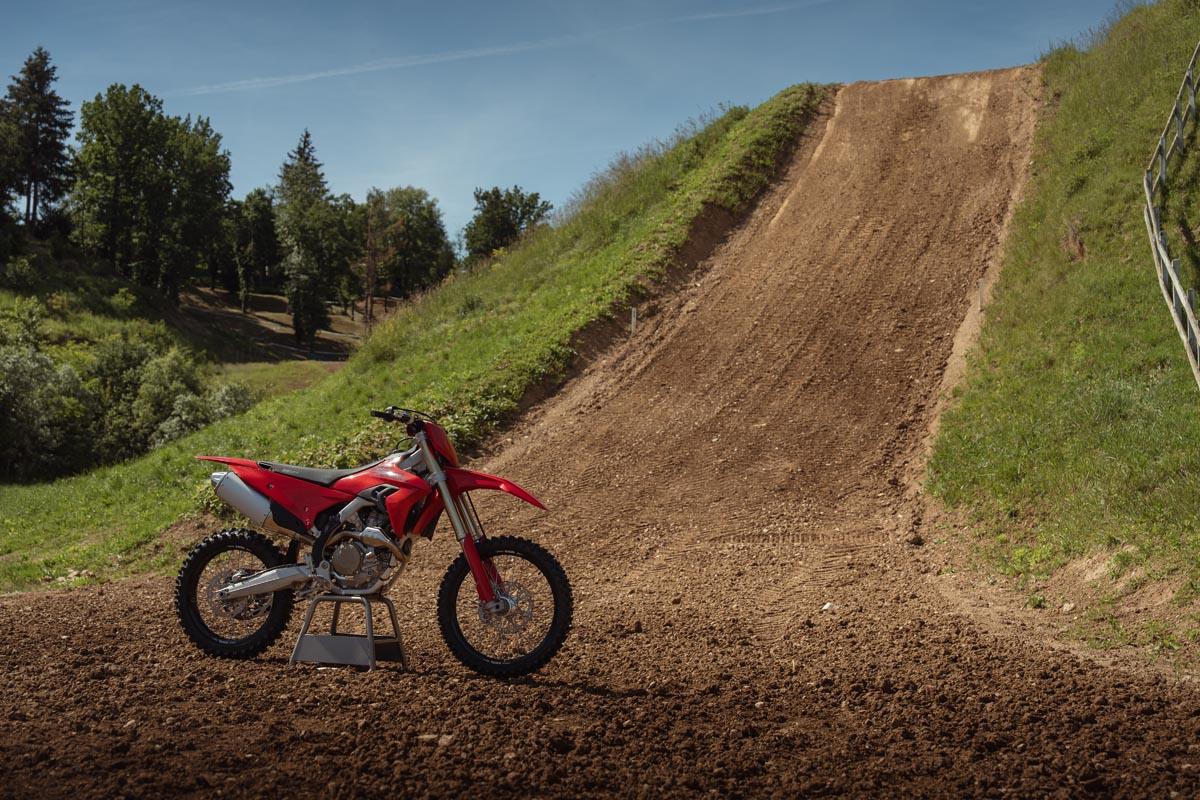
First look: Ducati reveal Desmo 250MX and confirm plans for follow-up enduro model
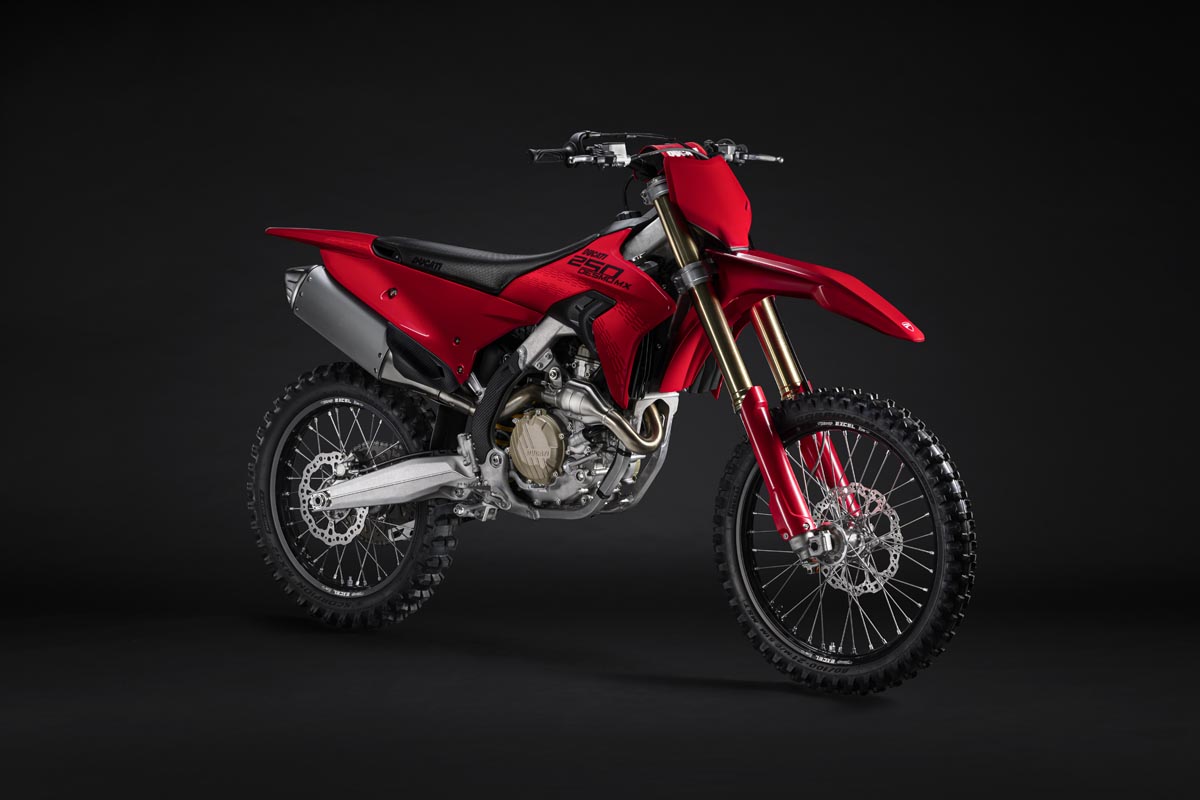
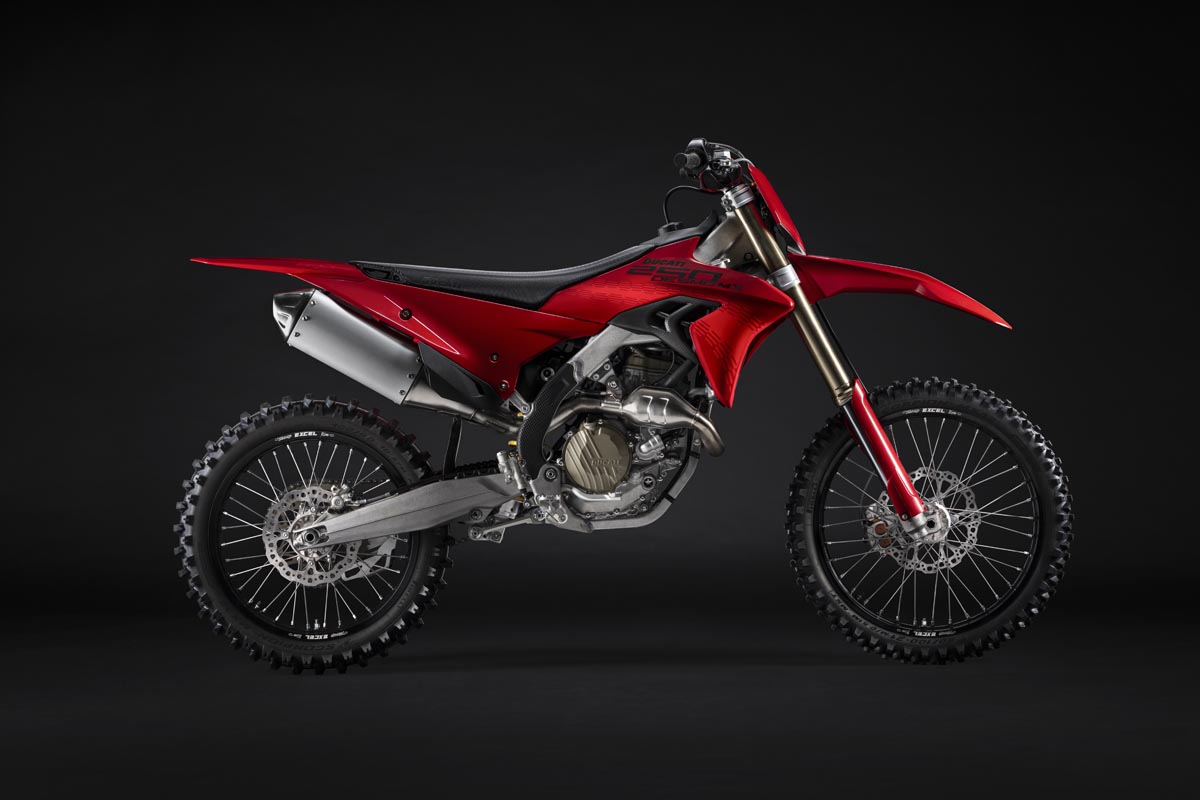
One year on from the launch of their breakthrough motocross model, Ducati have expanded their off-road stable again, lifting the lid on the all-new £8995 Desmo 250MX, also revealing to Enduro21 that a homologated enduro version is underway and expected to arrive before 2028.
The quarter-litre MX2 contender joins its bigger brother, the Desmo 450MX, with bikes expected in European dealerships from July, followed by North American markets in August.
That’s big news for the MX crowd, but what’s got us most excited is the prospect of a 250 enduro model to sit alongside the fresh-faced 450EDS.
Ducati have now officially acknowledged that such a machine is firmly in the pipeline, though specific details remain thin on the ground at this stage.
“We can confirm that a 250 enduro is in development. As for the timing, it is still too early to tell exactly,” Ducati Product Communication Specialist Edoardo Licciardello said.
Despite the uncertainty, Licciardello indicated that a MY28 launch remains a possibility, especially if the 250 enduro follows the path of its larger-capacity, just launched sibling.
Desmo 250MX details
At the heart of the new 250 MX is an all-new 249.7cc motor producing a claimed 44bhp at 12,500rpm and 21lb.ft of torque at 8800rpm, while sharing the same bore and stroke as Ducati’s Panigale V4 R superbike.
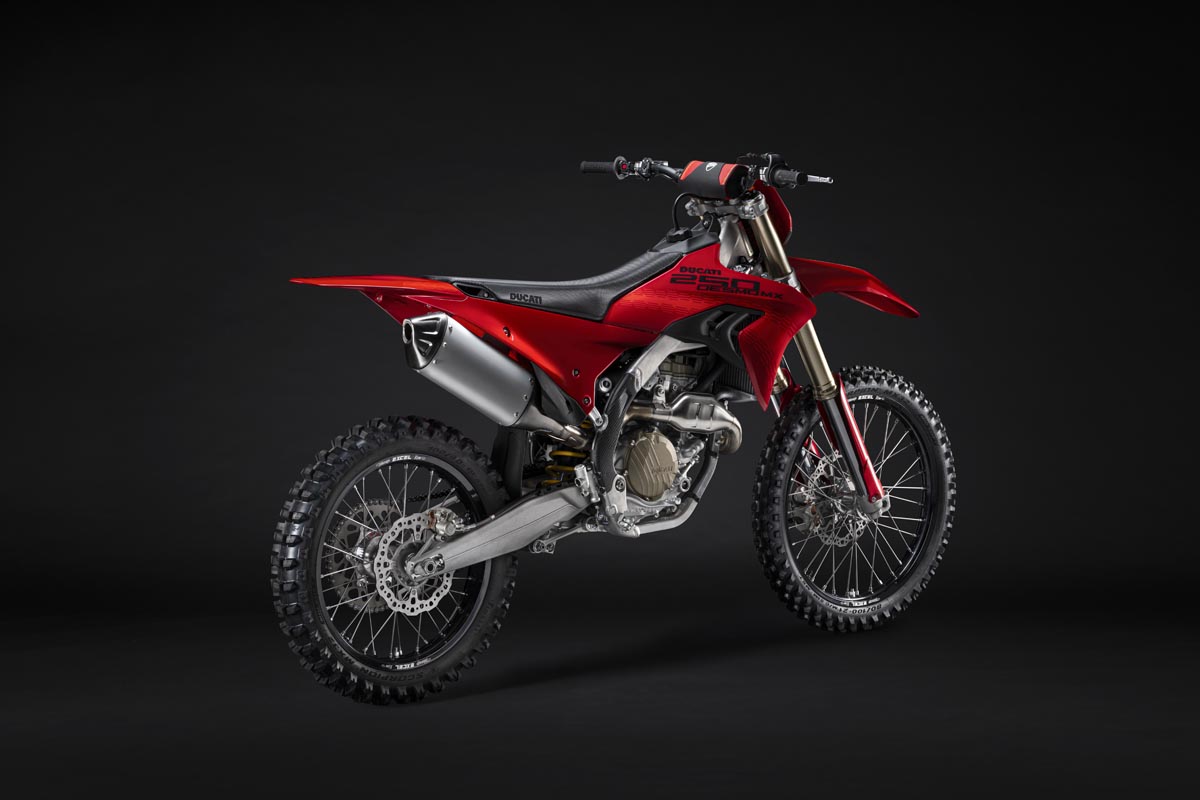
Like the V4, the firm’s trademark desmodromic valve actuation system features. It’s here on the little 250 where the coil spring-free valvetrain makes perhaps the most sense, allowing the engine to spin to a heady 15,000rpm without incurring valve float, likely helping to mark it as the class leader as far as outright power is concerned.
The chassis is near identical to that fitted to the 450, sharing the same aluminium frame, swingarm and Showa suspension package, with small tweaks made to suit the characteristics of the smaller, lighter motor.
Electrics carry over too, meaning the firm’s full arsenal of rider aids feature, including launch control, engine brake management, two engine maps, and Ducati’s posh traction control system, which ‘calibrates power adjustments based on actual rear wheel slip and inertial measurements of vehicle dynamics’. In simple terms, the bike’s onboard IMU feeds back what the bike is doing to the ECU, allowing it to finely tailor how much power is trimmed based on real-time wheelspin and the bike’s attitude, rather than reacting in a blunt, one-size-fits-all way.
The brand’s MotoGP-derived predictive maintenance system also carries over, allowing customers to get a real-time idea of their engine’s state of health and to stretch or shorten service intervals according to their riding style.
Photo credit: Ducati